Every month, National Cleaning Day leaves heaps of organic waste on our walkways. Each day, busy markets like Owino and Kalerwe generate tonnes of agricultural waste, including banana stems, pineapple crowns and fruit peelings. While many see this as a disposal problem, the Uganda Industrial Research Institute (UIRI) sees it as a steady source of industrial raw materials.
- 943 tonnes of municipal waste collected daily and taken to Kiteezi landfill
- 90–95% of collected waste across Kampala's five divisions is organic
- 2,100 tonnes collected monthly from six major markets
The scale of Kampala's market waste
A waste-supply assessment estimated that about 943 tonnes of municipal solid waste were collected daily and taken to the Kiteezi landfill. Between 89.8% and 95% of the waste collected across Kampala's five divisions was organic, which points to major room for recovery, recycling and value addition.
Markets matter most. Six of them (Nakasero, Kiseka, Kamwokya, Nateete, Nakawa and Kalerwe) generated about 2,100 tonnes of collected waste per month during the review period. Earlier studies of five key markets put the figure as high as 4,656 tonnes per month. Totals differ depending on whether waste is measured where it is generated, collected or delivered to landfill.
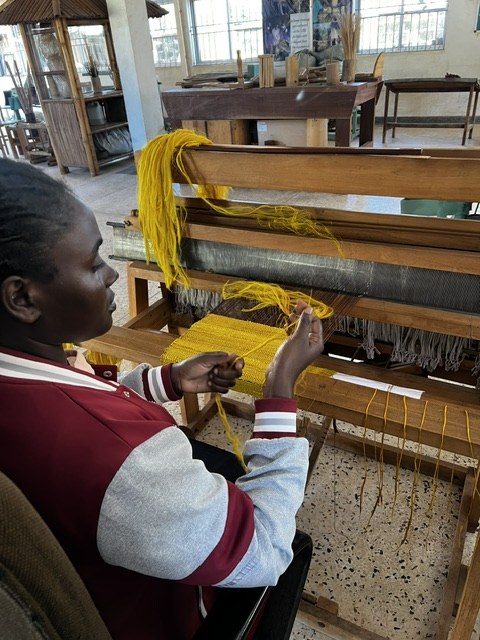
UIRI is a government parastatal under the Ministry of Trade, Industry and Cooperatives. It supports applied research, product development, technology transfer, machinery fabrication and business incubation to turn these waste streams into useful products.
From residues to eco-friendly products
Banana stems and agricultural fibres
About 90% of the collected market waste was crop-based, and banana residues made up the largest share: leaves, pseudo-stems, peels and peduncles. The rest included vegetable waste, maize residues, sugarcane bagasse and sweet-potato vines.
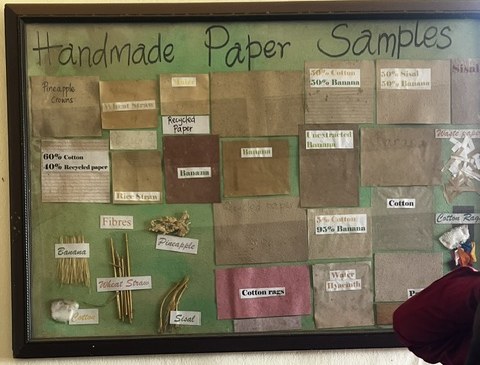
UIRI's Handmade Paper Section combines these fibres with pineapple crowns, sisal, bagasse, papyrus, wheat straw and clean paper waste. The result is biodegradable paper products, such as:
- Eco-friendly packaging bags
- Corporate folders
- Custom notebooks, cards and stationery, among others
This is a locally developed alternative to plastic packaging. It also builds skills, grows small enterprises and creates income.
Pineapple crowns and fibre
Pineapple crowns and leaves, often thrown away after harvest, also go into handmade paper. Depending on production needs, the fibres can serve packaging, industrial paper and some craft and textile uses.
Market waste as a strategic resource
Monthly volumes across five studied markets show how much potential Kampala's markets hold. Substantial amounts of fruit, bean, sugarcane and sweet-potato residues are also generated.
- Banana residues: 1,920 tonnes per month
- Vegetable waste: 694 tonnes per month
- Maize residues: 678 tonnes per month
UIRI's role goes beyond proving this can be done. It guides innovators from raw-material sourcing and prototypes through testing, technology transfer and enterprise creation, with:
- Business incubation and product refinement
- Packaging guidance
- Access to pilot processing facilities
- Analytical laboratory services
- Hands-on industrial training
This creates a practical opportunity to connect:
- Municipal waste-management systems
- Market authorities and vendors
- Youth and women's groups
- Green entrepreneurs and SMEs
- Researchers and technical institutions
- Manufacturers looking for alternative raw materials
The goal is not only to clear waste from the streets, but to build circular systems that separate, collect and convert waste into safe, marketable products.
A call for strategic partnerships
Managing Kampala's waste challenge means shifting from disposal to resource recovery and practical innovation, backed by partnerships that link the city's waste streams to Uganda's industrial goals.
UIRI invites municipal authorities, market associations, youth and women organisations, manufacturers, researchers and green entrepreneurs to work with us. Whether you need product development, technical training, laboratory analysis or business incubation, we are ready to help turn local materials into viable businesses.
“Before throwing material away, consider what else it could become. It may be the raw material for Uganda's next enterprise.”
Contact UIRI to learn how agricultural residues and paper waste can become sustainable products, useful skills and livelihoods.
From residue to product
Photo 1 of 3